Digital technology has a very real environmental impact
According to ADEME and Arcep, the digital sector currently accounts for around 4.4% of the national carbon footprint. If nothing is done, this share could rise to 45% by 2030, driven by growth in usage, online video, the cloud and artificial intelligence.
Contrary to popular belief, the manufacture of terminals (computers, smartphones, televisions, connected objects) accounts for up to 90% of the environmental impact of digital technology.
Every application that is too cumbersome or every oversized site contributes indirectly to this accelerated renewal of equipment.
With this in mind, integrating eco-design into digital projects is no longer an option, but a necessity. With this in mind, Lùkla helps companies design digital services that are more sober, more efficient and more sustainable.
What is digital eco-design?
Ecodesign involves integrating environmental criteria right from the design stage of a digital product or service, in order to improve its performance throughout its life cycle.
In other words, it’s not just a question of optimizing code or choosing a “green” host, but of thinking differently about digital: more useful, more sober, more sustainable.
This approach doesn’t just concern developers. It involves all professions:
- project managers, who define requirements and prioritize useful functionalities
- UX/UI designers, who create clear, lightweight interfaces
- technical teams, who optimize code and infrastructure
- business teams, who steer the energy-saving strategy and measure impacts.
At Lùkla, we help our customers integrate these practices into the design and implementation of their digital projects, from strategy to production.
RGESN 2024: a national frame of reference for action
To structure ecodesign initiatives, Arcep, Arcom and ADEME have published the General Ecodesign Standard for Digital Services (RGESN) in 2024.
This document provides a common base of 78 criteria, divided into nine themes covering the entire life cycle of a service:
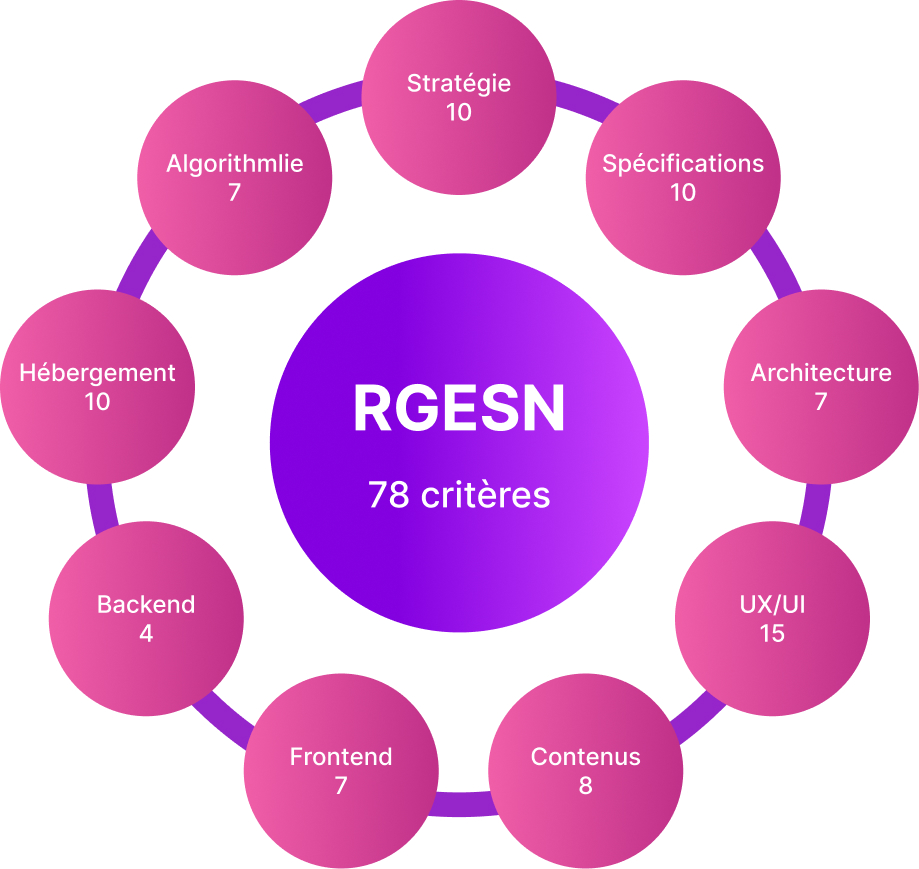
Each criterion is associated with a level of priority (priority, recommended, moderate) and contributes to a progress score that measures a service’s environmental maturity.
Lùkla supports its customers in understanding and implementing these requirements, through audits, training and action plans adapted to each context.
The 4 key objectives of digital eco-design
Designing sustainable digital services
Extend the lifespan of equipment by guaranteeing compatibility with older devices and limiting dependence on the latest technologies.
Promoting sober use
Prioritize features with real added value, avoid over-soliciting users (autoplay, infinite scrolling…), and leave the choice to the quality of the content displayed.
Reduce resources mobilized
Optimize media, lighten code, pool processing and adopt lean, high-performance technical architectures.
Enhancing environmental transparency
Measure impact, document progress and communicate clearly on actions taken.
Lùkla integrates these objectives into its customer projects, to reconcile digital performance, sobriety and environmental commitment.
Implement eco-design with Lùkla
Ecodesign is more than just one-off technical optimizations: it’s a structured, ongoing process.
Lùkla helps organizations to :
- Evaluate their digital impact and identify priority levers ;
- Train teams in RGESN principles and digital sobriety practices;
- Integrate eco-design into their design and development methods;
- Monitor progress using environmental performance indicators ;
- Promote results and commitments to stakeholders.
Thanks to a pragmatic, collaborative approach, Lùkla transforms environmental ambitions into concrete, measurable actions.
7 concrete ways to make a site more sober
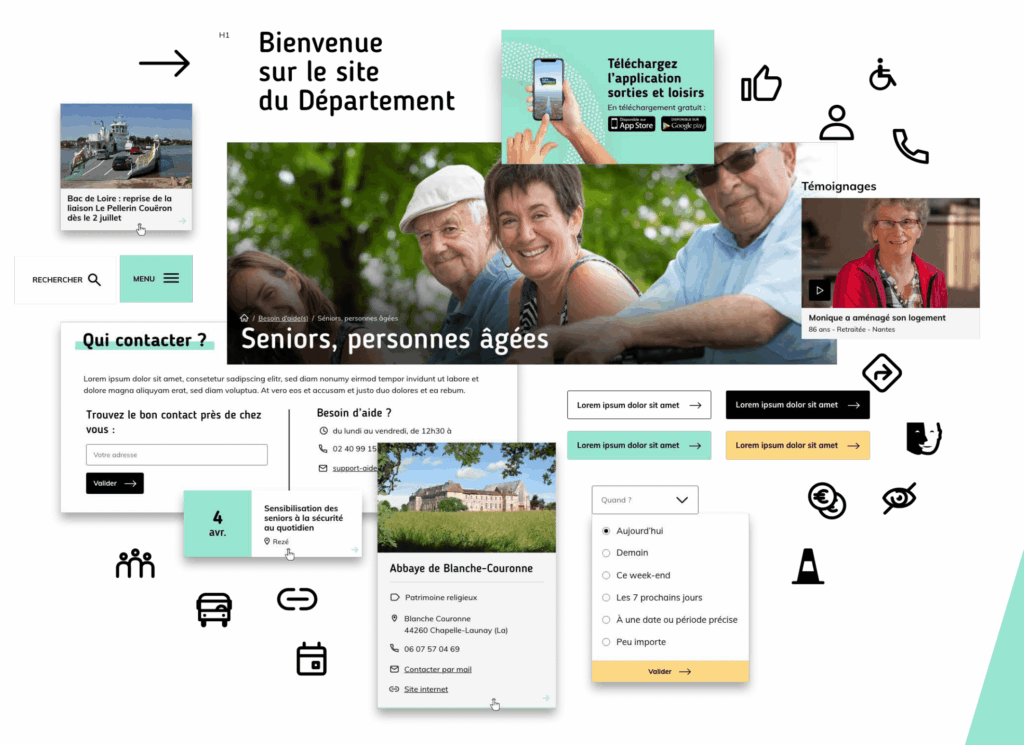
- Compress and control media: limit the size of images and videos, disable autoplay, adapt resolution to the context of use.
- Enable “lazy loading”: load content only when it becomes visible.
- Choose responsible hosting : favor data centers powered by renewable energy and with low PUE.
- Reuse and pool components: adopt a design system to avoid redundancy and facilitate maintenance.
- Limit fonts and visual effects: graphic simplicity and performance go hand in hand.
- Think mobile-first: design for lightweight devices and modest connections.
- Simplify navigation and improve accessibility: a clear, inclusive architecture reduces unnecessary load and enhances the user experience.
These best practices are at the heart of Lùkla’s projects, and we support our customers in the concrete application of these levers right from the design and development phases.
Towards useful, sustainable digital technology
Digital eco-design is not a constraint: it’s a lever for responsible innovation.
It enables us to create digital products that are more efficient, inclusive and respectful of the environment, while enhancing the quality of the user experience.
By relying on the principles of the RGESN and the expertise of Lùkla’s teams, companies can make their digital projects part of a sustainable dynamic consistent with their CSR commitments.